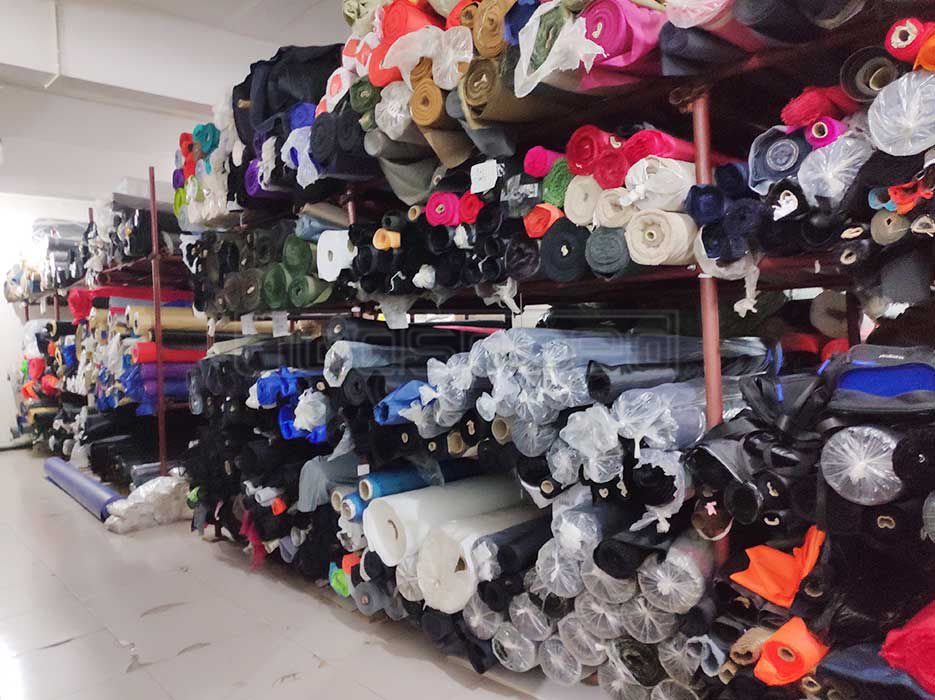
A photograph can start a discussion about bag fabric, but it does not establish which color, texture or component a buyer has approved. A custom bag may combine a shell, lining, pocket fabric, webbing and zipper tape. If a sample comment says only "use the same blue," the next revision may be difficult to compare. A component-level swatch record gives the buyer and factory a clearer reference. This is a planning method, not a claim that a particular material or performance level is available for every project.
The cover photograph shows textile storage at the factory. It is not an approved swatch set for the example project below.
Name each material area
Begin with a drawing or annotated photograph of the proposed bag. Give every material area an identifier: S01 for the outer shell, L01 for the lining and W01 for webbing, for example. Use those identifiers in sample comments and the approval record. This prevents "change the dark fabric" from referring to several different areas.
Record where each component appears and what the buyer expects it to do. Similar appearance does not automatically require identical material. Ask the factory which construction options are feasible for the specific design before treating an appearance reference as a technical specification.
| Field | Buyer entry | Review purpose |
|---|---|---|
| Component ID | Panel, lining or trim location | Connects feedback to one part |
| Reference | Physical swatch code or named source | Distinguishes similar options |
| Appearance | Desired color, texture and finish | Makes visual feedback specific |
| Sample revision | Sample on which it was reviewed | Prevents older choices being reused |
| Status | Proposed, approved or open | Separates an option from an instruction |
A screen image can communicate direction, but it should not silently replace an agreed physical reference. If no swatch exists yet, mark that entry provisional and ask for an identified sample.
Compare loose swatches with the assembled sample
Approval of a loose fabric piece and approval of the finished panel are different decisions. Put the swatch next to the matching area of the physical bag sample. Compare the visible color and surface character under viewing conditions agreed by the buyer's team. Also inspect neighboring components: lining, webbing and zipper tape can change the overall impression even when the shell itself looks right.
Write down exactly what was reviewed. "S01 appearance accepted on sample B; W01 still open" is more useful than "all colors approved" when not every component has been checked. Photograph the swatch identifier and bag area together, while retaining the physical reference for the next review.
Keep performance questions separate. Water resistance, abrasion behavior and other ratings cannot be established by looking at a swatch. If such requirements matter, define the required outcome, assessment method and evidence for this project and confirm the proposed option with the factory.
Keep substitutions traceable
A buyer may request a color adjustment or a different material after the first sample. Record the reason, affected component IDs, old reference, proposed replacement and sample revision for the new review. Leave the old decision visible rather than rewriting the record as though it never existed.
Use this short sequence:
- Identify every visible material component on the drawing.
- Attach or name a swatch reference for each and mark unresolved choices.
- Compare those references with the assembled sample and record accept, revise or undecided by component.
- When an option changes, issue an updated record and identify the sample revision carrying it.
- Before final approval, compare the current record, physical references and current sample side by side.
This is useful across a related bag range, but keep decisions for each style separate. A laptop backpack, sports bag and equipment case may share a visual direction without sharing every panel or trim.
Send a workable material brief
For factory review, provide the drawing, component IDs, identified swatches, desired appearance, open questions and current sample revision. Include intended quantity and destination market so options can be discussed for the project. This guide is not a fixed material catalogue, performance promise, price or production timetable.
See the OEM / ODM workflow for the broader development process. When the component list is ready, contact Guangshun Bags with the drawing and swatch record to discuss your custom bag project.