Logo placement is easy to approve too early in a custom bag project. A mark that looks centered on a flat drawing may sit close to a zipper, fold or pocket edge when the sample is filled and worn. Overseas buyers can avoid ambiguous instructions by treating the logo as a measurable design component: identify the exact panel, artwork version, size, production question and approval evidence. This checklist is a buyer-planning tool, not a specification for a particular Guangshun product or a promise that one decoration method suits every material.
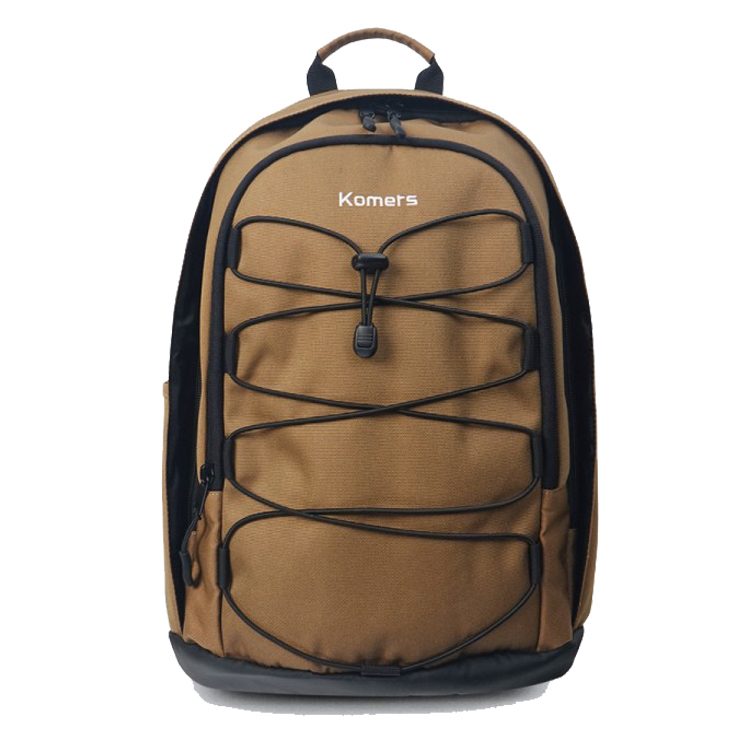
The cover photograph shows an existing backpack reference with a Komers mark. Its position is an example to examine, not an approved logo layout for a new buyer project.
Identify the panel before choosing a logo size
Begin with the intended user and viewing angle. A front-panel mark, shoulder-strap mark and internal-label mark serve different purposes. Name the physical panel on a marked photograph or simple drawing. Then note the top, bottom and side edges that the factory should measure from. Avoid instructions such as 'center the logo' unless the panel and the centerline are defined.
A useful placement sheet records the bag style, colorway, panel identifier and artwork identifier on the same page. If the bag has more than one size, do not assume that a single offset or logo width will look right across the range. Show a separate proposed measurement for each size and confirm it on samples.
| Buyer decision | Record in the brief | Check on the sample |
|---|---|---|
| Location | Panel name and a marked front, side or inside view | Is the mark visible in the intended carrying position? |
| Size | Width, height and orientation of the visible mark | Does the actual result match the approved reference? |
| Position | Distances to named panel edges or a defined centerline | Does filling or folding change the apparent position? |
| Color | Approved artwork color against each bag colorway | Is the contrast acceptable in normal viewing conditions? |
| Method | Proposed application method for factory review | Is the result suitable on the chosen panel and material? |
These are review prompts, not universal tolerances. Agree any allowable variation for the specific order before approving production.
Keep artwork and application decisions separate
Send the best available source artwork, its intended colors and a version identifier. State which elements may not be changed. If the artwork includes small lettering or fine details, ask the factory to review whether the proposed size and method can reproduce them on the selected material. A digital mockup can show direction, but a physical application on the actual panel is the approval reference.
Do not approve a method only because another bag used it. Embroidery, printing, patches and labels have different visual and construction implications, and feasibility depends on the particular artwork, material, panel shape and order requirements. Ask for a proposal and sample before treating any method as final. If the mark belongs to a buyer or third party, the buyer should confirm that the supplied artwork is authorized for the project.
Review the mark on a filled, carried sample
Inspect the logo when the bag is empty, packed with the intended items and carried in the normal way. Look for changes caused by a curved panel, pocket contents, straps or the opening path. Check the mark from the distance at which a customer would normally see it, then examine the edges and small details close up. Use consistent lighting and photograph each view for the approval record.
A practical sample check includes:
- Compare the sample against the approved artwork file and note its version number.
- Measure the visible mark and its position from the named panel edges.
- Open every nearby zipper or pocket and check whether the mark is interrupted or hidden.
- Pack the intended contents and check whether the panel shape changes the visual balance.
- Wear or carry the bag in each intended mode and review the mark from the front and side.
- Record any correction with an annotated photograph and one clear measurement, rather than an unqualified request to move it slightly.
The checklist assesses appearance and placement. It does not establish wash durability, abrasion resistance or another performance result; define separate evidence if the buyer requires such a claim.
Approve every colorway and keep one final record
A logo that reads well on a dark sample may have insufficient visual contrast on a light or patterned version. Create a small matrix with bag colorway, artwork color, panel, size, method and sample approval status. If one combination changes, update only the affected row and its reference image. Do not let a newer email attachment silently replace the final approved file.
Before approving the production brief, identify who signs off the physical sample and which artwork, panel map and colorway matrix form the final reference. Keep unresolved questions visible. The factory can then review feasibility against one controlled set of instructions rather than conflicting mockups.
For bag shapes and panel examples, see custom laptop backpack references and the OEM / ODM workflow. When the artwork and placement sheet are ready, contact Guangshun Bags to discuss a sample for your own project.