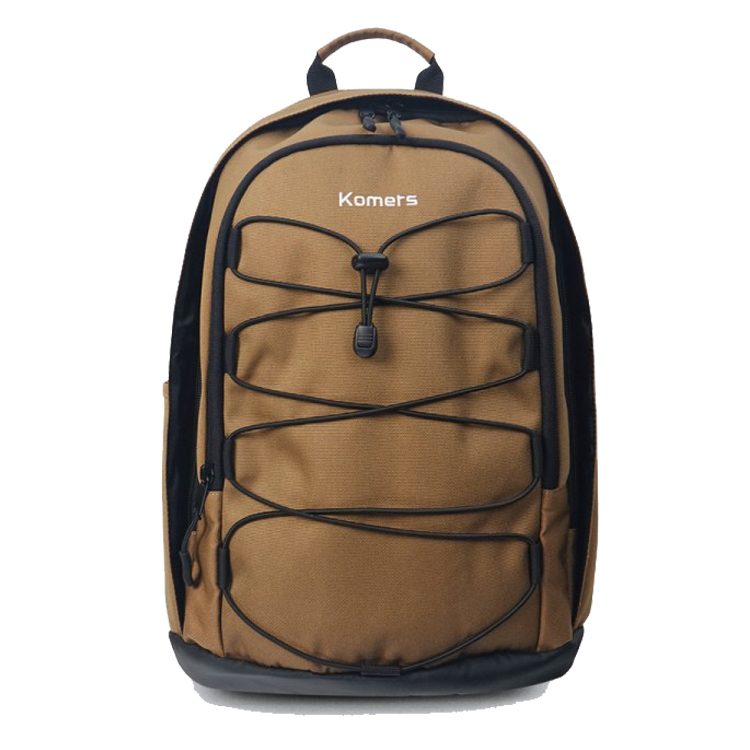
A reference photograph can show the appearance you want, but it rarely explains exactly how a laptop backpack should work. Before asking for a custom sample, put the main decisions into one brief that your purchasing, design and factory teams can all read. The following checklist is a practical starting point, not a promise of a particular price, production schedule or protective rating.
1. Record the device, not only the screen size
Start with the actual laptop models the bag must accommodate. Record each device's external width, height and thickness, and say whether it will be carried with an additional sleeve. A screen-size label alone does not describe the complete object that needs to fit.
Explain how you want the laptop to enter and leave its compartment. Should it have a separate opening, share the main compartment or sit behind an organizer? Ask the factory to confirm the proposed usable compartment dimensions in the sample rather than relying on the outer bag dimensions. If several devices must fit, identify which ones will be used for the approval check.
2. Make a pocket map around a real daily load
List what the intended user actually carries: laptop, charger, notebook, bottle, headset and any additional items. Mark each item as essential or optional, then assign it to a proposed pocket. This helps avoid adding attractive-looking compartments that compete for the same internal space.
Use a simple numbered sketch. Give every pocket a number and record its opening, intended contents and access direction. Note which items must be reachable without opening the main compartment. For an expandable pocket, explain whether you expect it to remain usable when the main compartment is packed.
3. Separate design decisions from open questions
| Brief item | What the buyer supplies | What to confirm in the sample |
|---|---|---|
| Laptop fit | Device dimensions and sleeve use | Usable space and access with the specified device |
| Main compartment | A list of the daily load | Packing arrangement with all essential items |
| Bottle pocket | Intended bottle dimensions | Access and pocket shape when the bag is filled |
| Branding | Artwork file and placement sketch | Actual logo position, size and appearance |
| Carrying details | Intended carrying style | Strap adjustment, handle access and user feedback |
Use a separate column for questions that are not yet decided. If your team has not selected a zipper or lining, mark it as an open item and request options. Do not let an early reference photo accidentally become an approval for every visible component.
4. Attach material and branding references
Identify the main fabric, lining, trims and hardware separately. Where possible, provide an approved physical swatch or a clearly identified reference. Record the color reference and surface appearance your team wants; a photograph alone should not be treated as a final color approval.
For branding, include the artwork, desired dimensions and a placement drawing referenced to a seam or panel edge. Ask which application method is suitable for the selected panel and confirm it on the actual sample. If you need a performance claim such as water resistance, agree on the required evidence and assessment method separately instead of assuming it from the fabric's appearance.
5. Review the sample with a numbered change log
Give the sample a revision identifier and keep feedback in one shared record. For each comment, include the pocket or panel number, an annotated photograph, the requested change and its priority. Distinguish a required correction from an optional design experiment.
Try the approved device and daily load in the sample. Record fit, access and packing observations. Appearance approval and functional approval are different decisions, so capture both before discussing the next production step. Consolidate comments from different colleagues into one final version to avoid conflicting instructions.
Send one complete brief for review
Include your intended order quantity, destination country and requested timeline alongside the design record. Ask the factory to confirm feasibility, remaining open decisions and a proposed sampling approach; these details should be discussed for the specific project.
Explore custom laptop backpack examples to choose a starting structure. When your brief is ready, contact Guangshun Bags with your device list, pocket map and references for an OEM project discussion.