A team sports bag range can become confusing when sizes are chosen only by appearance. A small, medium and large label says little about which kit fits, how the bag is carried or whether the same pocket arrangement works across all three versions. Overseas brands and club buyers can make a clearer OEM brief by defining the equipment and users for each proposed size first. This guide offers a planning method, not a standard capacity chart or a promise about any finished product.
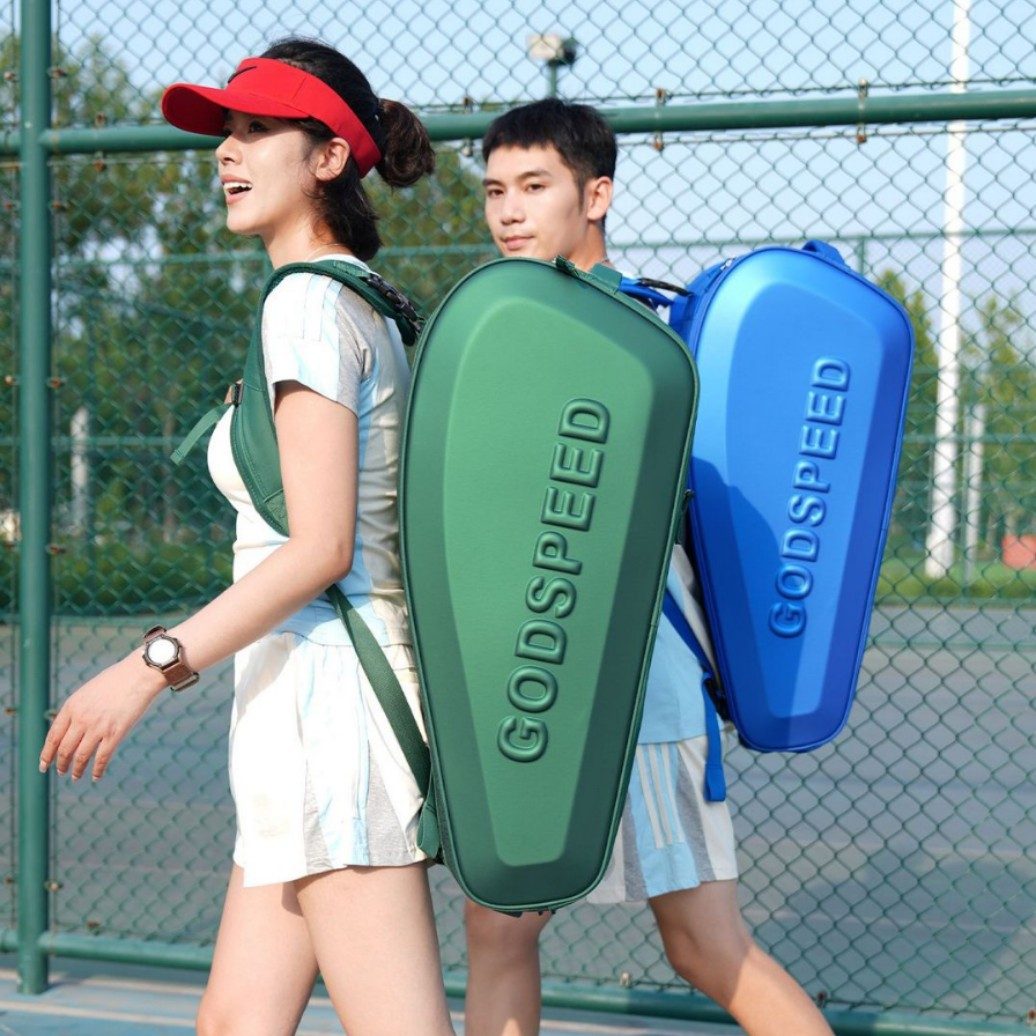
The cover photograph is a sports and racket bag reference from the Guangshun Bags website. It does not represent the size assortment described in this guide.
Define users and complete kit sets
Start with the people who will receive the bags. A junior player, adult player, coach and traveling team member may carry different combinations of clothing, footwear and sport-specific equipment. Write one complete kit list for each intended user group. Include accessories normally packed inside smaller pouches, because those pouches also take space.
Record each item in the condition in which it will enter the bag. For a racket program, note the actual racket and any cover. For a training bag, include the footwear, clothing bundle, towel and personal items that belong in the normal load. Use photographs and maximum packed dimensions for irregular items. Do not convert an unconfirmed list into a final bag volume.
A working table can expose overlap between proposed sizes:
| Proposed version | Intended user and occasion | Complete kit to test | Open decision |
|---|---|---|---|
| Compact | Short training session or lighter kit | Actual compact-use item list | Must footwear travel inside this version? |
| Standard | Typical team or club use | Actual standard-use item list | Which items need separate access? |
| Extended | Travel or additional team equipment | Actual extended-use item list | How will the loaded bag be carried? |
These labels are planning placeholders. Rename or remove a version if the kit checks do not justify it. A buyer may need two well-defined sizes instead of three nearly identical products.
Decide what should stay consistent across sizes
Identify the features that make the bags one recognizable assortment: exterior shape, branding position, color references, opening style and the way key pockets are named. Then mark which details legitimately change with the load. A larger bag may need a different compartment map or carrying arrangement; copying every panel in a fixed proportion can leave pockets that are too narrow for their intended contents.
Create one feature matrix with columns for each proposed version. Mark every feature as required, optional or still open. For example, an external item pocket might be required on all versions while a dedicated shoe area is relevant only where the complete kit includes footwear. Confirm the arrangement on samples rather than treating a drawing as approval.
Keep performance language separate from the layout. If the program needs a particular carrying capacity, water resistance or another measurable outcome, specify how it will be evaluated for the finished design. A larger-looking bag or heavier-looking handle is not evidence of a tested result.
Check dimensions against storage and transport
Usable internal dimensions matter more than a size name. Ask how buyers and end users will store the bag between uses. Check whether a filled bag must fit a particular locker, shelf, vehicle compartment or retail display. Record the limits as project requirements with a source, such as the actual locker measurement, rather than assuming a universal size.
When several size versions share packaging or distribution channels, list those constraints in the same brief. Confirm the destination market, labeling needs and proposed packing arrangement with the project team. Keep commercial terms, carton details and final dimensions open until reviewed for the specific order.
Test each proposed size with its assigned kit
Prepare a separate sample review sheet for every version. Photograph the empty bag, its complete assigned kit and the fully packed result. Use the same item identifiers from the kit lists so feedback can be compared without guessing which shoes or racket were used.
For each sample:
- Pack the intended kit without substituting smaller or fewer items.
- Open and close the bag while all assigned compartments are occupied.
- Retrieve the frequently used items in their normal order.
- Check whether exterior pockets remain accessible when the main compartment is full.
- Carry the loaded sample in the intended way and record comfort and handling feedback from representative users.
- Place the packed bag in any stated storage space and record the actual clearance.
- Photograph fit problems, assign a panel or pocket identifier and request one consolidated revision.
These are fit and use checks, not proof of durability or a certified load rating. If two versions fail the same test for different reasons, document separate corrections rather than applying one change across the whole range.
Send a size-range brief that can be reviewed
The final inquiry should show who uses each version, the complete kit list, packed item measurements, proposed feature matrix, storage constraints, branding references and unresolved decisions. Add the intended order quantity and destination market for project discussion. Ask the factory to review feasibility and the sampling approach for each version before final approval.
See custom sports bag references and the OEM and ODM workflow. When the kits and size matrix are ready, contact Guangshun Bags to discuss a team sports bag assortment.